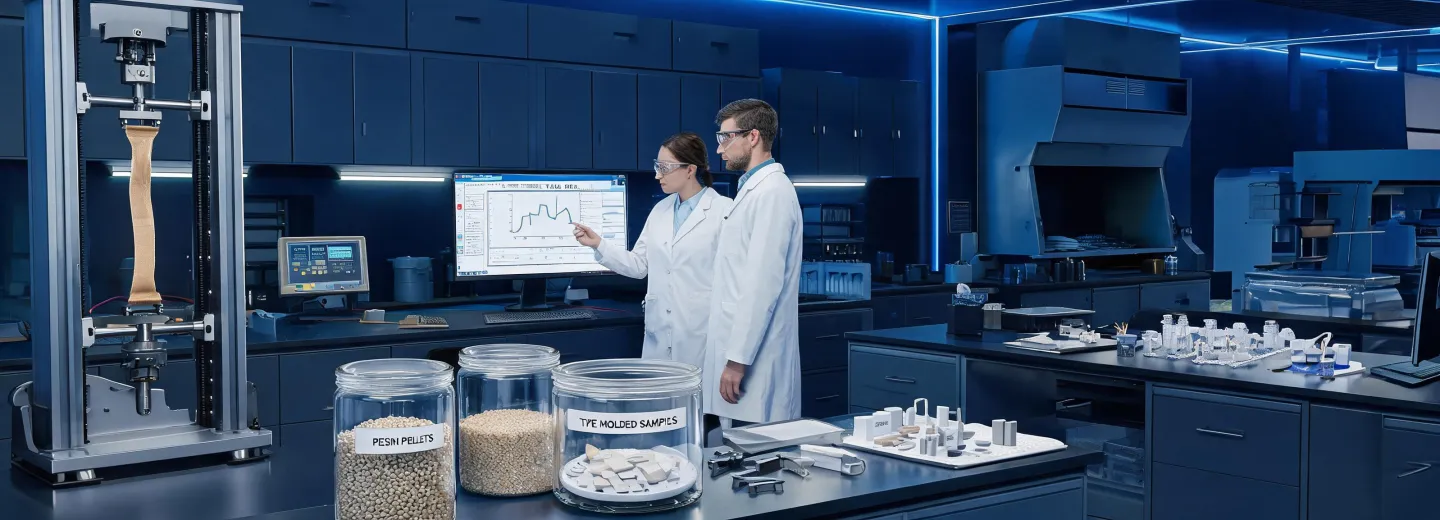
Kraton technical service laboratory

Technical services

Kraton turns material requests into controlled qualification workflows.

Rubber, TPE, resin and plastic processing projects rarely fail because a buyer lacked names in a catalog. They fail because material behavior, plant limits, compliance evidence and approval timing were not reviewed in one sequence.

Service coverage

Three service lanes keep engineering and procurement aligned.

Kraton supports teams that need to reduce qualification uncertainty without slowing sourcing work. Each lane is built to produce usable documentation rather than broad recommendations.

01

Application screening

Kraton reviews functional requirements, exposure conditions, surface energy, hardness range, part movement, and plant process limits before narrowing rubber or polymer choices. This prevents early sampling from becoming a trial-and-error exercise.

02

Evidence packaging

Technical notes can organize mechanical behavior, aging references, peel strength, conversion windows, migration concerns and restricted-substance questions into a file that quality and customer approval teams can review.

03

Supply qualification

For programs moving beyond exploratory selection, Kraton helps frame lead time, forecast volume, risk of substitution, approval status and documentation expectations so commercial discussions stay connected to production reality.

Review process

A numbered path from RFQ to trial readiness.

The workflow is intentionally linear. It asks for the information that makes a material answer defensible, then converts that information into a recommendation package a plant, converter or OEM can actually use.

1

Requirement intake

Collect application, material family, substrate, temperature, contact media, regulatory region and target production timing.

2

Technical screen

Compare available elastomer, rubber, resin and packaging polymer paths against performance and processing constraints.

3

Evidence alignment

Attach datasheet, compliance, trial and test references that answer the buyer role responsible for approval.

4

Commercial route

Translate the technical path into sampling, forecast, packaging, documentation and supply review requirements.

Service promise: no generic answer where an application constraint is missing.

Kraton would rather ask one more technical question than recommend a rubber compound, TPE, resin or adhesive system that cannot survive the real process. That discipline protects tooling investment, line trials, customer approval schedules and long-cycle procurement commitments.

Start the review

Send enough detail for Kraton to respond with a usable technical path.

Include current material, target property, failure mode, conversion method, compliance region, annual volume, sample timing and the reason for change. A buyer searching for "kraton rubber" may need an elastomer review, a TPE substitution path or a resin compatibility discussion. The form lets Kraton route the request correctly.

  • Part function and exposure conditions
  • Processing method and equipment limits
  • Required standards, customer approvals and geography
  • Forecast volume, timing and incumbent material information